In short
- TER has three groups: country houses (casas de campo), agritourism (agroturismo) and rural hotels (hotéis rurais). Country houses in a village, operated in an integrated way by a single entity, are village tourism (turismo de aldeia).
- The core framework is Decree-Law No. 39/2008, as currently in force; the minimum requirements for TER are set out in Ordinance No. 937/2008.
- The classification of country houses and agritourism falls to the municipal council (câmara municipal); that of rural hotels, to Turismo de Portugal.
- The design also complies with the technical construction standards: fire safety, health, hygiene, noise and energy efficiency.
- TER and short-term rental accommodation (alojamento local) are different regimes.
- Confirm viability in the municipal master plan (Plano Diretor Municipal, PDM) before buying the land or the property.
What is rural tourism?
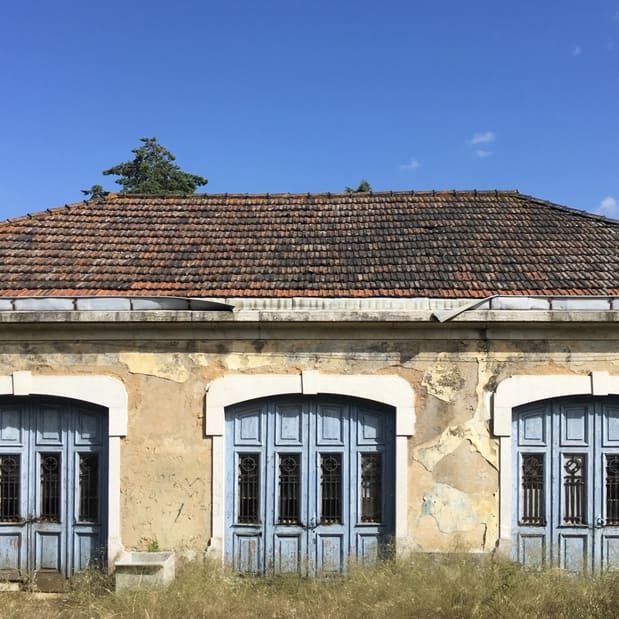
Under the legal framework for tourist establishments (Decree-Law No. 39/2008 of 7 March, Article 18), rural tourism establishments provide accommodation services to tourists in rural areas, preserving, restoring and enhancing the architectural, historical, natural and landscape heritage of the places where they are located. They do so, as a rule, through the reconstruction, rehabilitation or extension of existing buildings.
For the designer, this means starting from the place: from the existing building, the scale of the village or of the farmstead (monte), and the materials and techniques of the region. For works on existing buildings, the law requires the application of the principle of protection of existing buildings (garantia do existente) provided for in the Legal Framework for Urbanisation and Building.
What types of TER establishment are there?
The law classifies them into three groups (Article 18(3)).
Country house
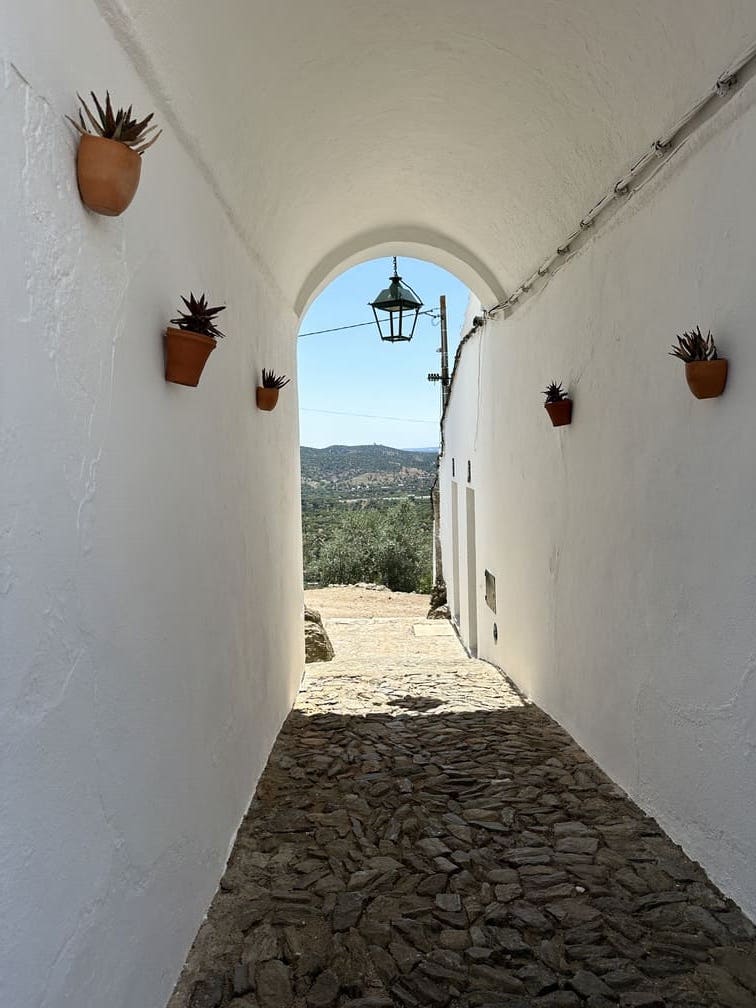
Properties located in villages and rural areas that blend in, through their layout, building materials and other characteristics, with the typical local architecture. They are often a solution for rehabilitating old buildings; see buildings predating 1951 and REN.
And village tourism?
When country houses are located in a village and are operated in an integrated way by a single entity, they are considered village tourism. It is not a fourth group: it is a way of operating country houses together.
Agritourism
Properties located on farms that allow guests to follow and learn about the agricultural activity, or to take part in the work, in accordance with the rules set by the person responsible for the establishment.
Rural hotel
Hotel establishments that meet the classification requirements applicable to this type. They may be set up in existing buildings or in buildings constructed from scratch.
Each group has its own minimum requirements for facilities and operation, set out in Ordinance No. 937/2008 of 20 August. The architectural design should confirm them before sizing the bedrooms, sanitary facilities and common areas.
Which legislation applies?
- Legal framework for tourist establishments: Decree-Law No. 39/2008 of 7 March, as currently in force (republished by Decree-Law No. 80/2017 of 30 June, and subsequently amended by Decree-Law No. 9/2021 of 29 January).
- *Minimum requirements for manor-house tourism (turismo de habitação) and rural tourism:* Ordinance No. 937/2008 of 20 August.
- Development operations: Legal Framework for Urbanisation and Building (Regime Jurídico da Urbanização e da Edificação, RJUE) (Decree-Law No. 555/99, as currently in force). See the article on the new RJUE.
- Municipal plan: the PDM and, where they exist, urbanisation plans (planos de urbanização) or detailed plans (planos de pormenor) for the area.
The setting up of tourist establishments must comply with the rules of the Legal Framework for Urbanisation and Building and with the technical construction standards, namely as regards fire safety, health, hygiene, noise and energy efficiency (Decree-Law No. 39/2008, Article 5).
Who classifies the establishment?
The municipal council sets the maximum capacity and assigns the classification of country houses and agritourism. For rural hotels, this competence lies with Turismo de Portugal. Establishments in operation are listed in the National Register of Tourist Establishments (Registo Nacional dos Empreendimentos Turísticos, RNET), made available by Turismo de Portugal.
To understand the procedure for the works, see the building permit page and the prior information request (pedido de informação prévia).
What should the design resolve?
Integration with the place. Layout, materials and construction techniques consistent with the architecture of the region, adaptation to the terrain and a predominance of permeable surfaces. See the landscape architecture project.
Fire safety. The design complies with the fire safety regulations for buildings applicable to the use. See the fire safety project.
Water and drainage. In rural areas, there is not always a public network. In that case, the design has to provide its own solutions for water supply and wastewater treatment. See the design of building water supply and drainage networks.
Comfort and energy. Thermal performance, acoustics and ventilation are part of the engineering specialties of the design; see the engineering specialty designs.
Municipal plan parameters. The PDM defines what can be built on each parcel: permitted uses, areas, heights and indices. The values vary from one municipality to another. See what the PDM is.
Can a TER be set up on rural land?
The framework law on land allows, on rural land (solo rústico), areas intended, among other purposes, for tourism, recreation and leisure (Law No. 31/2014, Article 10(2)(a)). But what is permitted on a specific parcel depends on the PDM and on the constraints affecting it, such as the National Ecological Reserve (Reserva Ecológica Nacional, REN) or the National Agricultural Reserve (Reserva Agrícola Nacional, RAN). That is why the check is made plot by plot, before buying. For the context of the recent changes, read the review of the Land Law.
What should I check before buying the land or the property?
- whether the land classification and the municipal plan allow the intended tourist use and building;
- the constraints affecting the land, such as REN, RAN or easements;
- the condition of the existing buildings and their documentation;
- water supply, drainage and access.
See what else to check in buying land. Before designing, a prior information request makes it possible to confirm viability with the municipal council.
What does spacelovers do on a TER project?
spacelovers is an architecture studio. We carry out the viability analysis, the architectural design and the coordination of the engineering specialties, handle the permitting and provide technical assistance during construction. We are not building contractors: the Client contracts the building contractor directly, and decisions and contracts belong to the Client. See our architecture projects, building rehabilitation and new build.
Frequently asked questions
Can I convert an old house into a country house?
It may be possible. The rehabilitation of existing buildings is the typical route for TER, but it depends on the PDM, the constraints on the land, the condition of the building and the requirements of Ordinance No. 937/2008. Confirm viability before buying or designing.
Do I need a fire safety project?
The design has to comply with the fire safety rules applicable to the use and to the risk category of the building. Depending on the category, either a specialty design or a fire safety data sheet (ficha de segurança) is required.
Is a TER the same as short-term rental accommodation?
No. Short-term rental accommodation (alojamento local) has its own regime (Decree-Law No. 128/2014, as currently in force) and applies to establishments that do not meet the requirements to be tourist establishments. TER is a type of tourist establishment, with its own classification and minimum requirements.
Who assigns the classification to a country house?
The municipal council. In the case of rural hotels, the classification is assigned by Turismo de Portugal.
This content is for information only and does not constitute legal advice. For your specific situation, legal advice should be provided by a qualified professional in the field.
Photo: spacelovers.