In short
- The gas project is one of the specialty projects (projetos de especialidades) and must be coordinated with the architecture project.
- The applicable framework is Decree-Law No. 97/2017, as currently in force: it covers the design, installation, inspection and maintenance of gas installations in buildings.
- Installing gas is no longer mandatory in new buildings or buildings undergoing works; if there is a gas installation, there is a project.
- The designer is an engineer or technical engineer, recognised as qualified by the relevant professional body.
- Supply only begins with an inspection declaration certifying that the installation is fit for use.
- Maintenance is the responsibility of the owner or the usufructuary; in the common parts of a condominium (condomínio), it is the responsibility of the condominium.
What is a gas installation project?
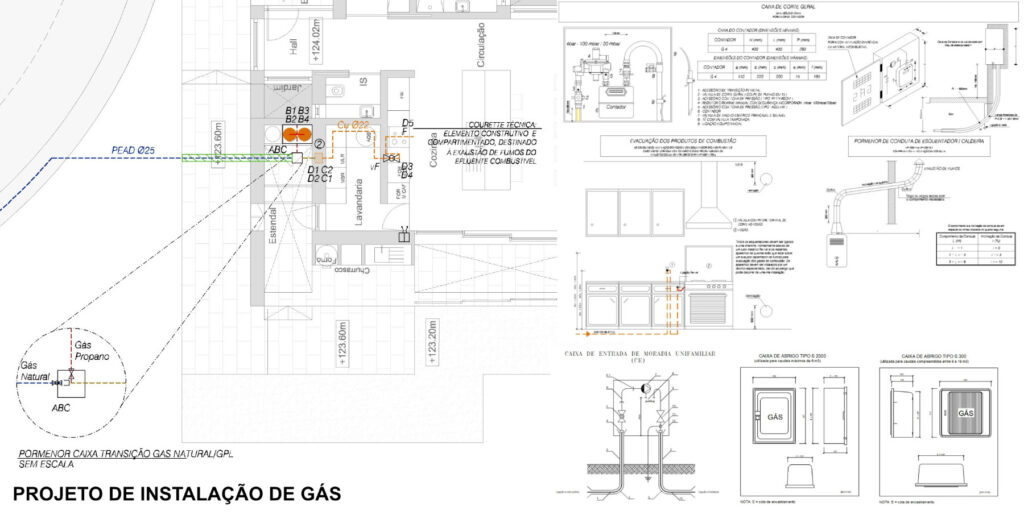
It is the project that defines the fuel gas installation in a building: the routing and sizing of the pipework, the materials, the location of appliances and meters, the ventilation of rooms and the evacuation of combustion products. Its purpose is the safety of the building's users.
It is one of the specialty projects, like the electrical project. Ministerial Order (Portaria) No. 320/2026/1, which sets out the elements of applications to the municipal council (Câmara Municipal), includes it in the list of specialties as "gas installation project, where required by law".
When is a gas project mandatory?
For several years, buildings to be constructed or undergoing works subject to prior control (controlo prévio) were, as a rule, required to have a gas installation. Decree-Law No. 11/2023 of 10 February removed that obligation, amending Decree-Law No. 97/2017.
Today the rule is this: if the building or unit is going to have a gas installation, that installation must have a project. If the choice is not to install gas, the decision should be made clear in the file submitted to the municipal council. How this is done varies from one municipality to another, so it is confirmed with the municipal council right at the start.
Who can prepare the gas project?
The project is prepared by a designer: an engineer or technical engineer registered with the relevant professional body and considered by it to be qualified for this type of project, under Law No. 15/2015. The conformity of the project with the applicable standards is certified by a gas inspection body (entidade inspetora de gás, EIG).
What types of gas appliances are there?
Decree-Law No. 97/2017 distinguishes three types:
- Type A (non-connected): operates without a flue to evacuate combustion products to the outside.
- Type B (connected): operates connected to a flue that evacuates combustion products to the outside of the room.
- Type C (room-sealed): the combustion circuit (air intake, combustion chamber and evacuation) is sealed off from the room in which the appliance is installed.
The type of appliance determines the ventilation of the room and the design of the flue outlet.
What must the project resolve?
- Routing and sizing: pipework, pressure regulators and materials sized to deliver to each appliance the flow rate it needs, in accordance with the applicable standards.
- Ventilation: Decree-Law No. 97/2017 requires buildings with gas appliances to comply with the NP 1037 series of standards on ventilation and evacuation of combustion products. The project's descriptive report includes the information on the building's ventilation.
- Location of appliances and meters: accessible for maintenance and compatible with the planned ventilation and evacuation.
- Project documents: descriptive and justificatory report, written documents and drawings.
How does it relate to the architecture and the licensing process?
The gas project starts from the architecture project and must be coordinated with it. The kitchen hob, hot water production, the position of the gas water heater or boiler, ventilation openings and flue outlets on the façade or roof are defined together. It also overlaps with the ventilation, air-conditioning and smoke extraction project and with fire safety.
That is why the decision whether or not to use gas is taken early, at the architecture project stage. Under Decree-Law No. 555/99, as currently in force, specialty projects are submitted to the municipal council with the licensing (licenciamento) application or after approval of the architecture project; under prior communication (comunicação prévia), they form part of the application itself.
And in a renovation?
Before finalising the design of the kitchen and bathrooms, decide which appliances you want and whether you will keep, alter or remove the gas. It is a decision with an impact on ventilation, flue outlets and the design of walls and ceilings. The installation, alteration and maintenance of gas installations are carried out by licensed gas installers (entidades instaladoras). See how we organise an apartment renovation.
What happens before supply and afterwards?
Gas supply may only take place once there is an inspection declaration, issued by a gas inspection body, certifying that the installation is fit for supply to begin or continue.
Afterwards, the installations and connected appliances must be maintained by a licensed installer. The request and the costs are the responsibility of the owner or the usufructuary. In the common parts of a condominium, they are the responsibility of the condominium; in rented units, the lease may transfer that obligation to the tenant. Certain installations are also subject to periodic inspection, at intervals set by the decree-law according to the type of building and the age of the installation.
How do we handle this specialty?
spacelovers is an architecture studio in Lisbon. It designs the project, handles the licensing and provides technical assistance during construction. In our architecture projects, the specialties, including gas where there is one, are prepared by professionals qualified for each and coordinated with the architecture. During the works, we provide technical assistance on the Client's behalf. Decisions and contracts belong to the Client.
How much does a gas installation project cost?
It depends on the type of building, the number of units and the number of appliances. We prepare a proposal for each case: Request a proposal. For construction costs, see the reference values in the renovation cost simulator.
Frequently asked questions
Does a new house have to have gas?
No. Since Decree-Law No. 11/2023, new buildings or buildings undergoing works are no longer required to have a gas installation. If you choose not to have gas, check with the municipal council how that choice is recorded in the file.
Who can sign the gas project?
An engineer or technical engineer registered with the relevant professional body and considered by it to be qualified for gas projects, under Law No. 15/2015.
When can gas supply begin?
Only once there is an inspection declaration, issued by a gas inspection body, certifying that the installation is fit for use.
Who pays for the maintenance of the gas installation?
The owner or the usufructuary. In the common parts of a condominium, the condominium. In rented units, the lease may transfer that obligation to the tenant.
This content is for information only and does not constitute legal advice. For your specific situation, legal advice should be provided by a qualified professional in the field.
Photo: spacelovers.